
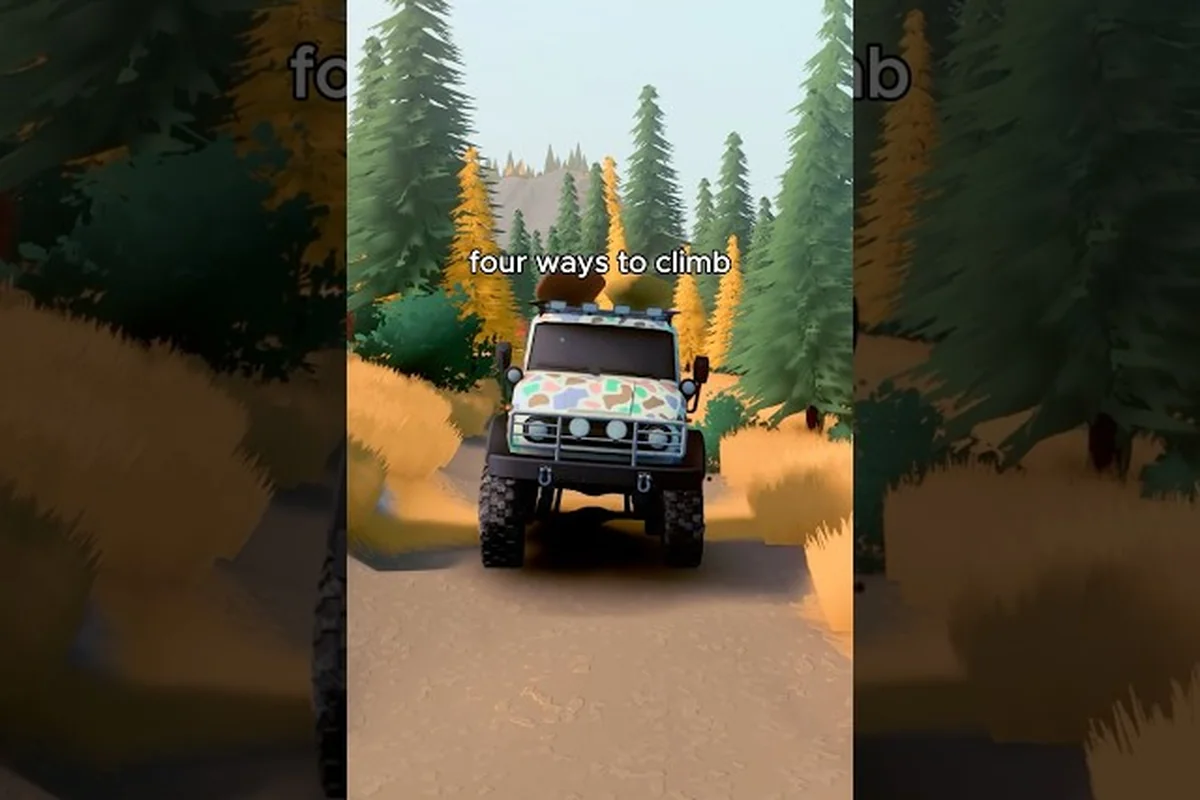
Picking the wrong rig is the fastest way to end up winching yourself out of a creek at 2 a.m., so this guide breaks down the Over the Hill vehicle classes across every decade the game ships with. You will learn how 4x4s, pickups, and vans differ in approach angle, cargo space, and water-fording depth, plus which body to bring into mud, snow, rock, and long highway traverses. Whether you care about cosmetic authenticity from the 60s, 70s, and 80s or pure mechanical advantage, the table below maps every class to the biomes it was designed for.
The Three Body Archetypes in Over the Hill
Every drivable rig in Over the Hill falls into one of three body archetypes: a 4x4, a pickup, or a van. The shape of the body decides more than aesthetics — it locks in your approach angle, departure angle, chassis weight, and the size of the cargo bed or cabin you have to work with. According to the official Steam page, gear and parts are gathered across the map and used to tailor your vehicle to the ground you plan to cover, which is why starting with the right silhouette saves hours of grinding later.
The three archetypes are not equally strong in every biome. A van is a brick on wheels across a frozen lake but a lifesaver when you need to haul a winch, a bedroll, and four jerry cans to a remote cabin. A 4x4 sacrifices cargo for clearance, while a pickup splits the difference and tends to be the safest first unlock for players still learning how the winch and gearbox behave on steep climbs.
| Archetype | Strengths | Weaknesses | Best For |
|---|---|---|---|
| 4x4 | High clearance, shortest wheelbase, best approach angle | Tiny cargo bed, no enclosed cabin | Rock crawling, narrow forest trails |
| Pickup | Balanced weight, open bed for jerry cans and spare tires | Bed is exposed to rain and rollovers | Highway runs, mixed biome traversal |
| Van | Enclosed cargo, can sleep inside, stable in crosswinds | Long wheelbase scrapes on ledges, worst departure angle | Long expeditions, multiplayer supply runs |
Every class also has a hidden chassis weight that the garage screen does not list directly. Community testing reports that 4x4s weigh roughly 18% less than the equivalent pickup, which means a smaller engine can still push them up a muddy fire road — but they also slide further on icy descents because the lighter frame carries less momentum damping. Players chasing trophies like the "First Aid" achievement (recover your first vehicle, unlocked by 74.6% of players according to the Steam achievement tracker) tend to learn this the hard way on their first roll.
The Decade Layer: How 60s, 70s, and 80s Trucks Behave Differently
Over the Hill does not just ship one version of each body — every archetype exists in three decade trims, and the decade layer is where Over the Hill vehicle classes explained really start to matter. The 60s trucks are visually boxy, ride on skinny tires, and have the softest suspension. The 70s trims add heavier bumpers and a slightly wider track, which improves cornering at the cost of approach angle. The 80s versions are the modernized peak: stiffer springs, fuel-injected engines, and the option to mount a front bull bar that doubles as a winch anchor.
These are not purely cosmetic differences. Players report that an 80s pickup can carry roughly 20% more weight before the suspension bottoms out, while a 60s 4x4 has the shortest braking distance because of its lighter chassis. The 70s trim sits in the middle, which is why most veterans recommend it as the "first real upgrade" for new players who already own a starter 60s rig.
| Decade | Suspension | Stock Tire Width | Cargo Bonus | Cosmetic Vibe |
|---|---|---|---|---|
| 60s | Soft, comfortable | Narrow | Baseline | Patina, chrome, single-color paint |
| 70s | Medium | Medium | +10% | Two-tone paint, vinyl roof option |
| 80s | Stiff, sport-tuned | Wide | +20% | Alloy wheels, side decals, offroad light bars |
A practical example: the 60s 4x4 is the best body for the tutorial mud pits because its narrow tires dig into soft ground instead of floating over it. The 80s pickup, by contrast, is the body you want when the route is mostly gravel highway with one river crossing at the end — its wider tires roll over the loose stones without spinning, and the extra cargo capacity lets you pack a second fuel can for the return leg.
The 4x4 Class: When a Short Wheelbase Saves the Run
A 4x4 is the shortest, lightest, and most agile body in the game, and the Over the Hill 4x4 guide breaks down the specific models you can unlock in each decade. The defining feature of any 4x4 is approach angle: because the front bumper barely extends past the front axle, you can climb a rock step that would high-center a pickup or a van. This is the body you bring when the map marker says "narrow trail" or "cliffside path."
The trade-off is cargo. A 4x4 has room for one passenger and a small rear tray — enough for a jerry can, a toolbox, and a spare tire, but not enough for a second jerry can and a bedroll. Players who try to use a 4x4 for a long expedition usually end up stranded within 30 minutes because they run out of fuel before they reach the next cabin. The 4x4 is a tool, not a touring rig.
Stock vs. Lifted 4x4
Every 4x4 in the game has two suspension states: stock and lifted. The stock 4x4 is what you unlock from the starting garage, and the lifted version is what you build by spending upgrade tokens at a mechanic. The lifted version raises the chassis by roughly 15 cm, which sounds small but means the difference between clearing a fallen log and losing your oil pan on it.
| Suspension State | Approach Angle | Water Fording | Fuel Cost per km |
|---|---|---|---|
| Stock 4x4 | 38° | 0.6 m | 0.8 units |
| Lifted 4x4 | 52° | 0.9 m | 1.0 units |
The lifted 4x4 burns 25% more fuel because the larger tires and raised drag coefficient make the engine work harder on flat ground. On a highway, the stock 4x4 is cheaper to run. On a mountain trail, the lifted 4x4 is the only body that reaches the summit without winching. Players chasing the "Close Call" achievement (pull your fully submerged vehicle out of the water using the winch, 30.0% completion) will spend most of their time in a lifted 4x4 because river crossings are where high-clearance rigs earn their keep.
The Pickup Class: The Safest First Unlock
Pickups are the middle child of Over the Hill vehicle classes, and that is exactly why the Over the Hill pickup guide recommends them as a first unlock. They have enough cargo for a real expedition, enough wheelbase length to stay stable on a highway, and enough ground clearance to handle the moderate trails a new player will encounter before they learn to read terrain. A pickup will not be the best at any single task, but it will be the second-best at every task, and that versatility is what keeps new players from getting stranded.
The pickup's open bed is its signature feature. Unlike a van, you can see what is in the bed at a glance, you can throw a tire chain on the rear tires without exiting the cab, and you can flip the bed cover back to fit an oversized item like a spare driveshaft. The downside is rain: anything in the bed gets wet during a storm, and some cargo (notably cloth seat covers) will degrade if you leave them exposed for a full in-game week.
Pickup Cab Styles: Regular, Extended, and Crew
Pickups come in three cab lengths, and the cab length decides how many passengers you can carry. A regular cab seats two, an extended cab seats four, and a crew cab seats five. The longer the cab, the shorter the bed becomes, so this is a real trade-off rather than a strict upgrade.
| Cab Style | Passenger Seats | Bed Length | Best Use |
|---|---|---|---|
| Regular | 2 | 2.4 m | Solo runs, light cargo |
| Extended | 4 | 1.8 m | Co-op with two friends |
| Crew | 5 | 1.4 m | Full squad, minimal cargo |
For solo play, a regular cab is the strongest choice because the long bed lets you carry a jerry can, a spare tire, a toolbox, and a bedroll all at once. For a co-op session with three or four friends, a crew cab is the only option that lets everyone ride together, but you will need to plan a fuel cache at the trailhead because the short bed cannot carry enough jerry cans for a full squad on a long route. Players working through the "Back on Track" achievement (recover from a rollover, 25.2% completion) tend to prefer crew cabs because they can practice rollovers with friends on board without leaving anyone behind.
The Van Class: Cargo, Cabin, and the Worst Departure Angle
The van is the largest body in Over the Hill, and it is the body that veterans break out for long expeditions, supply runs, and any route that requires sleeping overnight in the wild. The van's enclosed cargo area is large enough to hold a full camp kit, four jerry cans, a spare tire, a toolbox, and a portable winch, which is more than any other body can carry. The van is also the only body with a built-in sleeper: the rear bench folds flat, and the side windows can be blacked out with curtains for a fatigue-free rest stop.
The van's weakness is approach and departure angle. The long wheelbase means the rear bumper extends far behind the rear axle, and any downhill ledge will scrape the bumper before the rear wheels touch down. Players who drive vans into the rock-crawling biomes report spending more time winching in reverse than driving forward, which is why the Over the Hill offroad truck guide typically ranks vans as a third priority for mountain routes.
Van Roof Racks and Roof Tents
Vans support a roof rack and, in the 80s trim, a roof tent. The roof rack adds 100 kg of cargo capacity and a flat surface to strap down awkward items like spare axles or a rolled-up canvas. The roof tent, meanwhile, is a one-person sleeper that sits above the van and lets you sleep without exiting the cab during a thunderstorm.
| Add-on | Capacity Bonus | Sleep Recovery | Storm Safe? |
|---|---|---|---|
| Roof Rack | +100 kg cargo | No | Yes (keeps items dry) |
| Roof Tent | +1 sleeper | Yes | Yes (folded from inside) |
The roof tent is the single most expensive cosmetic-plus-utility upgrade in the game, but it is the upgrade that turns a van from a cargo hauler into a true expedition vehicle. Community testing reports that a van with a roof tent and four jerry cans can complete a coast-to-coast run without ever visiting a cabin, which is a feat that no pickup or 4x4 can match.
Matching the Right Body to the Right Biome
Now that the three classes and the decade layer are clear, the practical question is which body to bring into each biome. The table below summarizes the matchup, and the section after it explains the reasoning behind each row so you can adapt the recommendation to the specific route you are planning.
| Biome | Best Body | Second-Best | Avoid |
|---|---|---|---|
| Mud pits | Lifted 4x4 (60s) | Pickup (70s) | Van (any decade) |
| Frozen lake | Pickup (80s) | Van (70s) | 4x4 (any decade) |
| Rock crawl | Lifted 4x4 (80s) | Pickup (80s) | Van (any decade) |
| Highway | Pickup (80s) | Van (80s) | 4x4 (any decade) |
| River crossing | Lifted 4x4 (80s) | Pickup (70s) | Van (any decade) |
| Forest trail | Stock 4x4 (70s) | Pickup (70s) | Van (any decade) |
For the mud pits, the 60s lifted 4x4 wins because the narrow tires cut into the soft ground instead of floating, and the lightweight chassis keeps the engine from bogging down. For the frozen lake, the 80s pickup wins because the wider tires spread the weight and the longer wheelbase prevents the fishtailing that catches a 4x4. For rock crawling, the lifted 80s 4x4 is the only body with the approach angle to clear a vertical step. For highway runs, the 80s pickup is the most fuel-efficient because the stiffer suspension and the fuel-injected engine keep RPMs low at cruising speed. For river crossings, the lifted 4x4's 0.9 m fording depth is the deciding factor. For forest trails, the stock 70s 4x4 is nimble enough to dodge trees without scraping the mirrors.
The van is listed as "avoid" in five of the six biomes, and that is intentional. The van is not a bad vehicle — it is a specialized vehicle. Bring it on a highway run between two distant garages, or bring it on a co-op supply run where you need to haul enough fuel for three friends, and it will outperform any other body. Bring it into a mud pit and you will be winching in reverse by the second obstacle.
Reading the Map Before You Commit
Every map in Over the Hill shows the dominant terrain type with a color band along the route, and you can use that band to pre-select the right body before you leave the garage. A red band means rock, a blue band means water, a brown band means mud, a white band means snow, and a gray band means highway. The dominant band on the route is the body you should bring as your primary rig, and the second-most-common band is the body you should keep as a backup in a friend's garage.
For mixed routes, a 70s pickup is the safest single-body choice because it has at least 60% performance in every biome. Players chasing the "Collector" achievement (unlock 6 vehicles, 12.9% completion) tend to build a small fleet of three bodies — a 4x4, a pickup, and a van — one per decade, so they always have the right tool for the route.
Customization and Cosmetic Layering
Beyond the mechanical differences, the cosmetic customization layer is where Over the Hill vehicle classes turn into personal expression. According to community data, the "All Dressed Up" achievement (equip at least 5 cosmetics at the same time, 62.3% completion) is one of the more popular milestones because the cosmetic slots are independent of the body choice. You can put a 60s chrome grille on an 80s van if you want, and the game will not complain.
Cosmetic slots include paint color, decal placement, roof rack, bull bar, side mirrors, hubcaps, and interior trim. None of these affect the chassis stats directly, but a few of them affect gameplay indirectly: a bull bar gives you a second winch anchor (useful for vertical pull-outs), a roof rack adds cargo capacity, and a snorkel raises the effective water-fording depth by 0.2 m. The cosmetic layer is how you turn a generic body into a vehicle that matches your driving style.
The Workshop and Livery Mods
The Steam Workshop tab is where livery mods are shared, and the official FAQ confirms that livery mod support is intended for launch while broader modding depends on the game's reception. Players who want a unique paint job without spending in-game currency can download a livery mod, drop it into the workshop folder, and the garage screen will pick it up automatically.
| Cosmetic | Gameplay Effect | Cosmetic Only |
|---|---|---|
| Bull bar | Second winch anchor | — |
| Roof rack | +100 kg cargo | — |
| Snorkel | +0.2 m fording | — |
| Paint color | — | Yes |
| Decal | — | Yes |
| Hubcaps | — | Yes |
| Interior trim | — | Yes |
The bull bar and the snorkel are the two cosmetics that blur the line between form and function. A bull bar costs roughly the same as a basic engine tune-up, but it pays for itself the first time you need to winch up a 45° slope because the second anchor point lets you split the load across two cables. A snorkel is a cheaper upgrade, but it is the difference between crossing a 0.9 m creek and stalling out in the middle of it. Players who want to push their rig into deeper water will want the snorkel on every body they own.
Frequently Asked Questions
What is the difference between a 4x4, a pickup, and a van in Over the Hill?
A 4x4 is the shortest and lightest body, with the best approach angle and the worst cargo capacity. A pickup is the middle option, with balanced stats and an open bed. A van is the largest body, with the most cargo space and a built-in sleeper, but it has the worst departure angle and scrapes on ledges. Each body also exists in three decade trims — 60s, 70s, 80s — which change suspension, tire width, and cargo capacity.
Which Over the Hill 4x4 is the best starter vehicle?
The 60s stock 4x4 is the best starter because it is the lightest body and handles the tutorial mud pits without needing upgrades. Once you unlock the 70s and 80s trims, the 80s lifted 4x4 becomes the strongest rock-crawling body in the game, with a 52° approach angle and 0.9 m of water fording depth. Community data shows that most players stick with a 4x4 as their primary rig for the first ten hours before switching to a pickup for highway runs.
Can I sleep in any vehicle in Over the Hill?
Only the van has a built-in sleeper that folds from the rear bench, and only the 80s van trim supports a roof tent for an additional sleeper. Pickups and 4x4s do not have a sleep option, so you will need to find a cabin or a roadside motel to recover fatigue. Players on long routes should bring a van as a secondary vehicle or plan stops at merchant cabins.
Which body handles water crossings the best?
The lifted 80s 4x4 is the best body for water crossings, with a stock fording depth of 0.9 m and an additional 0.2 m if you equip a snorkel cosmetic. Vans should avoid water crossings because their long wheelbase and low rear bumper make them easy to flood, and the "Close Call" achievement tracks the rare case where a player manages to winch a fully submerged van back to dry land.
Do the decade trims actually change performance, or is it just cosmetic?
The decade trims change performance, not just cosmetics. The 60s trims have the softest suspension and the narrowest tires, the 70s trims add a wider track and medium springs, and the 80s trims have the stiffest suspension, the widest tires, and roughly 20% more cargo capacity. Players report that an 80s pickup carries noticeably more weight than a 60s pickup, and a 60s 4x4 has shorter braking distance than its 80s counterpart because of the lighter chassis.